

Product Description
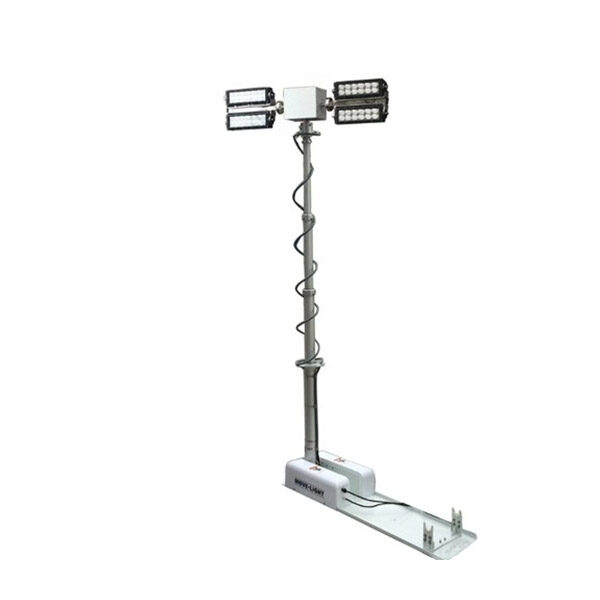
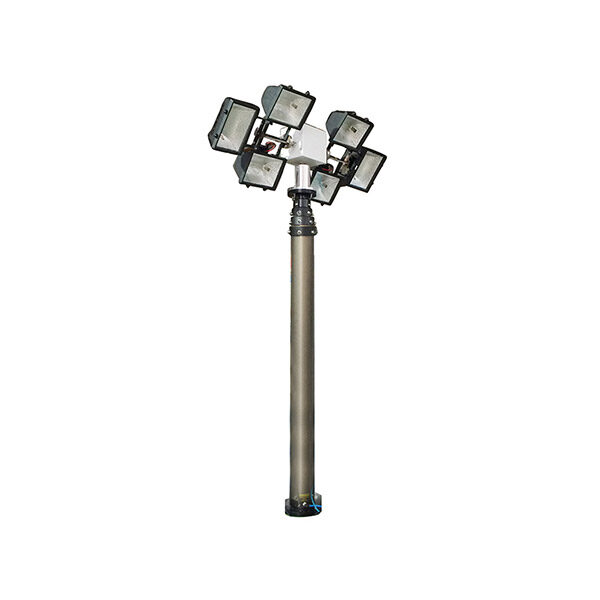
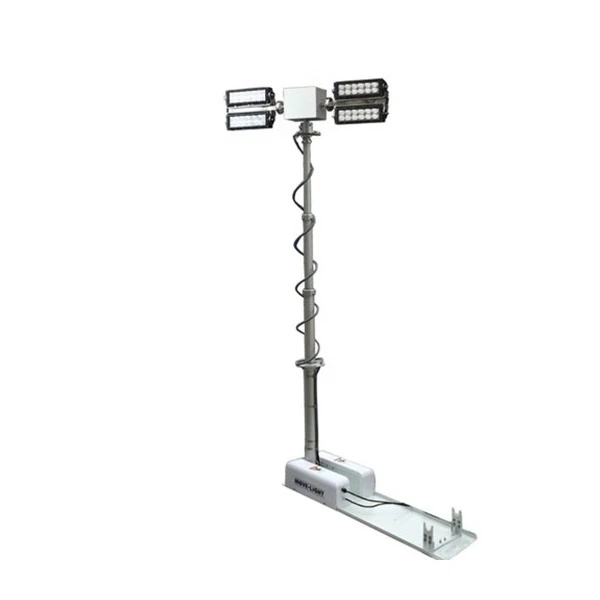
Telescopic Light Mast is an adjustable, retractable pole lighting device that can be adjusted in height as needed to provide light coverage, and is commonly used in outdoor projects, emergency rescue, event sites, field operations, and other occasions.
Feature
1. telescoping Design: The primary characteristic of the Telescopic Light Mast is its telescoping design, which enables users to freely customize the illumination intensity and range by adjusting the height as necessary.
2. Stability: The safety and dependability of this kind of light tower are guaranteed by its typically sturdy support structure, which can withstand adverse conditions like wind and rain.
3. Portability: Telescopic light masts are often made to be lightweight and portable, making them ideal for rapid installation and relocation to accommodate varying lighting requirements in various settings.
4. Energy-saving and environmental protection: LED light sources, which are typically used in this kind of light tower, are both ecologically friendly and energy-efficient. They can produce high-brightness lighting effects while lowering pollution levels and energy usage.
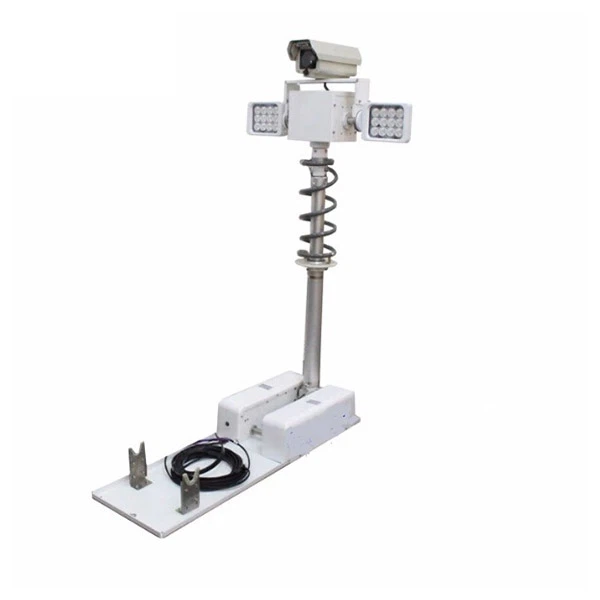
5. Versatility: In addition to providing lighting, the Telescopic Light Mast can be outfitted with cameras, loudspeakers, and other devices as needed to perform additional tasks.
Installation Method
1. Foundation preparation: Avoid installing on soft or unstable ground by making sure the installation site is level and sturdy. Anchor bolts and other fixing mechanisms can be utilized for scenes that need to be installed permanently.
2. Electrical connection: To guarantee the stability and safety of the electrical system, properly connect the power and control lines. Checking the generators' electrical connections and fuel system is also necessary for lighting towers that use generators.
3. Commissioning and testing: To make sure the lighting apparatus, telescopic features, and control systems are operating as intended, commissioning and functional testing are done following installation.
Application
Telescopic Light Mast is mainly used to provide mobile lighting for engineering vehicles, firefighting floodlight vehicles, accident reconnaissance vehicles, traffic patrol vehicles, and traffic rescue vehicles.
Why Choose Us
Wuxi Dingtepet Technology Co., Ltd is located in Wuxi in China, on the coast of Taihu Lake. The factory is 5 kilometers away from Wuxi Shuofang Airport. It is a professional company specializing in the research and development and production of lift pole products.
Wide Range of Applications
Our products are widely used in mobile lifting lighting with generators, engineering lighting equipment with various structural methods, Flagpoles with various lifting heights.
Wide Product Range
We are privately owned enterprise specializing in the production and processing of lifting rods, cylinders, oil cylinders, hydraulic pump stations, cylinder aluminum tubes and other products.
Advanced Equipment
The company has the most advanced aluminum tube precision deep processing equipment and aluminum tube surface oxidation treatment equipment in China.
Quick Response
Our commitment is to respond to your inquiries within 24 hours, ensuring that you receive the information and support you require in a timely manner.






What Is Telescopic Light Mast
Light mast is a tall lighting specified mast, which has several big searchlights on top of it. Light masts illuminates large areas and are possible to move, which is why they are used (for example) as farming, construction and emergency works implement. If you want to know the specifications and prices of Telescopic Light Mast, please contact us!
Safety
Tower lighting is one of the best options you can choose to illuminate a large area at night. Whether you're organising a music festival or working in overnight construction, having enough light to see by is vital to reduce the risks of accidents and injuries. In a construction setting, it can also help to ensure there is no reduction in the quality of work done at night, as tower lights are designed to provide similar levels of illumination to natural daylight.
While you could use smaller lights to achieve a similar effect, high-up light towers will provide illumination in a much more effective way, ideal for allaying health and safety concerns. And lighting towers aren't just for commercial enterprises. Safety is of the highest concern when organising commercial projects, but that doesn't mean you should overlook it if you're planning a domestic or unofficial event.
Easy to Set Up
If you're not an expert in lighting, you might be put off from using a lighting tower on the basis that you don't know how to set it up properly. However, lighting towers are designed to be used by anyone, from a qualified electrician to an experienced lighting engineer to a total layperson. Light towers generally come with detailed step-by-step instructions which take the confusion out of setting up the equipment.
Additionally, the speed at which light towers can be put together can be of added benefit to commercial ventures. Particularly in the case of construction, time is often of the essence, and the less time you need to spend setting up your equipment, the more you can spend getting the job done.
Easily Transported
As you might expect from a portable lighting solution, lighting towers are very easy to transport. Since they are regularly used on construction sites which can have rough terrain, some light towers have sturdy wheels. These allow you to move them from one side of your venue to the other without difficulty. Others are lightweight and can easily be carried before being set up in your location of choice.
Many lighting towers have tripod legs which allow greater stability, especially on uneven terrain. These usually have locking points on the legs, so they don't collapse once you've set them up. As such, they are a dependable source of light for construction and other uses.
Types of Telescopic Light Mast
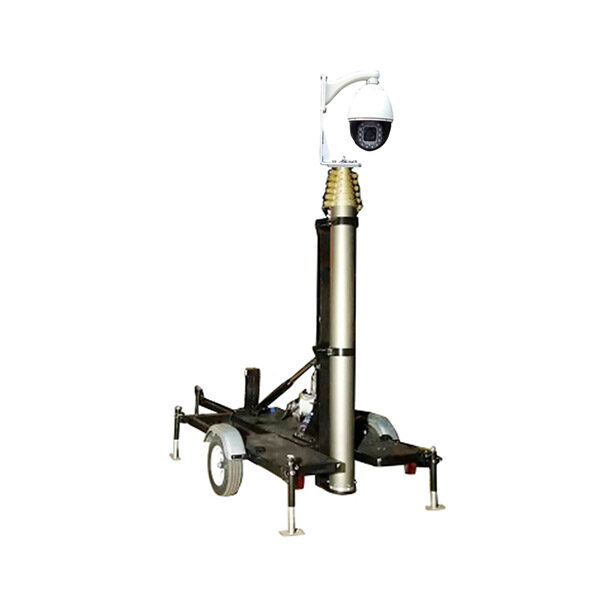
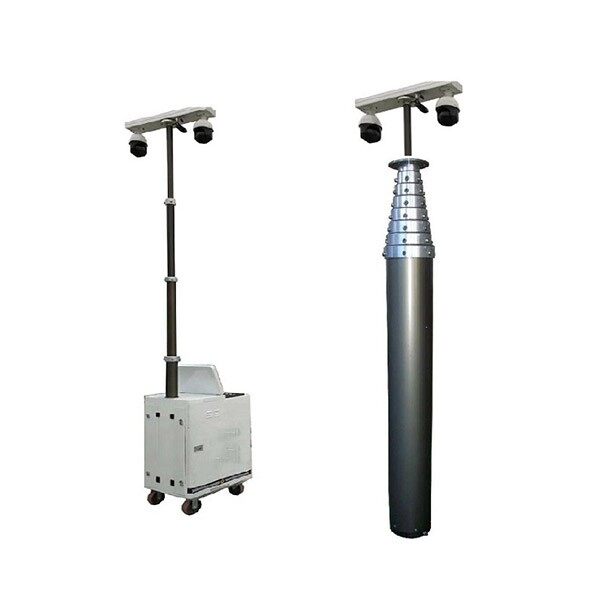
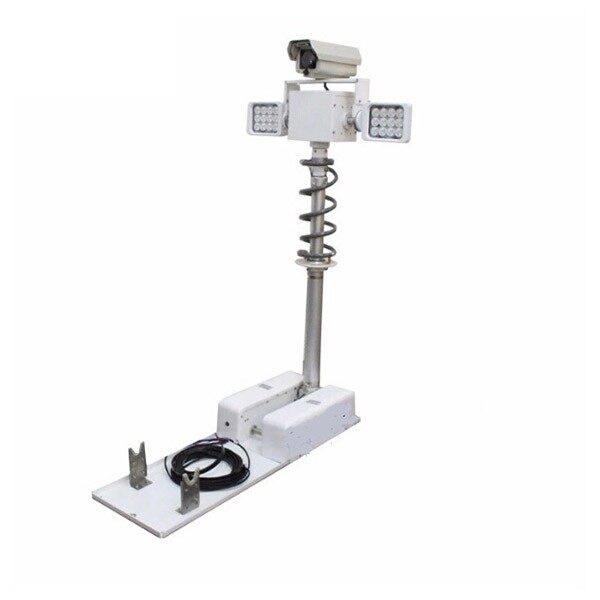
Stadium Mast
As outdoor sports and high-definition sports television broadcasts grow in popularity, sports venues need to be equipped with high-quality lighting. Fans and players alike benefit from optimum lighting. It is critical that players see clearly as the game picks up speed. As fan expectations rise, so do ticket prices, and the quality of the broadcast and viewing experience must always exceed the standards of high-definition broadcasts and technologies. Therefore, stadium masts are installed in stadiums, fields, and playgrounds to provide lighting during the evening hours.
Flag Mast
Whether you raise your flag once or raise and lower it each day, a flag mast is essential. Whether it is a government facility, college or university campus, sports venue, commercial enterprise, park or even for personal use, a custom-engineered flag mast that is easy to use, backed by decades of pole design and manufacturing experience, is indispensable. Tapered flag mast designs reduce wind-induced damage and prolong the life and durability of the mast.
Signage Mast: If you run a business where your customers have to find your location, such as a gas station, a grocery store, or a repair shop, signage masts are the best way to attract customers and highlight your brand. Installing signage masts near high traffic roadways provides optimum visibility and leaves a lasting impression on customers' minds.
Solar Mast
In light of non-renewable resources' limited and scarce nature, it is our responsibility to conserve them. Solar high mast provides light to a wide area without using conventional electricity or requiring costly electrical networks. It is advisable to use solar masts in areas where electricity is not readily accessible or where saving electricity is the highest priority. Solar masts are more reliable than conventional lighting systems since they are shock, vibration, and impact resistant.
High Mast Lighting Systems
High mast lighting is a type of site light fixture raised high to minimize ground-level obstructions and create uniform illumination across a massive space. The use of high mast lighting systems minimizes shadows that may result from using shorter poles. High mast lighting plays an exclusive role in facilitating night-time travel and transportation, citizen engagement in social gatherings and sports/recreation activities, around-the-clock industrial production, safety and guidance of traffic, and security of commercial, residential and public facilities and properties. Utkarsh India is among the leading high mast light pole manufacturers.
A Guide to Light Mast Heights and Corresponding Applications
Calculating Light Mast Height Requirements
Optimizing light mast efficiency and performance requires implementing a mounting height that maximizes light output and distance. As a general rule, the mounting height of a light tower should be half of the distance across the target area. For instance, if the distance of the work site is 100 feet, the luminary should reach at least 50 feet in height for adequate illumination. This formula is only applicable to lighting systems that emit light in one direction. For dual or multi-head light masts, (using the same example above) it would be possible to deploy a 25-foot light tower in the middle of the site, to illuminate 50 feet of space in both directions, resulting in full illumination of the 100-foot work site.
Industrial sites may choose to deploy more than one light mast on the site for greater illumination. For such configurations, spacing between light towers should be four times the mounting height. In application, a business that deploys six, 20-foot light masts should have 80 feet of space between each unit.
The effectiveness of height and spacing formulas depend on numerous factors, including vertical/horizontal aiming, lamp performance, lighting technology and beam configuration. For single floodlights, it is common practice to direct light beams 2/3 or 66 percent of the target's distance. For instance, in areas of 40 feet, the lamp should be aimed at a distance of 27 feet. Glare is a prevalent issue with powerful light towers; and to avoid this, one should not aim the unit over a distance that is twice the height of the mast. For example, a 30-foot light tower should be set at an angle of 30 degrees (minimum, horizontal) and should be aimed no more than 60 feet out (this is only applicable to single-lamp units).
Short Versus Tall (External Factors)
In some cases, the height requirements of a portable light tower are dictated by external factors, such as the applicable environment and work site specifications. Furthermore, our 50-foot Megatower is ideal for oil fields and mining sites that rely on large-scale equipment and structures between 20-30 feet above ground. For commercial projects, surrounding structures, such as buildings, statues and landscaping, should be well accounted for to reduce light obstruction.
When working with tall light masts, operators must take wind speeds into consideration. This factor alone could heavily influence the height requirements of the tower. Using data from the National Digital Forecast Database, it would be possible to see that work sites in Midwest and Mideast regions of the US experience generally high wind speeds; while Northern US regions experience generally low wind speeds.
Industrial and Commercial Applications
The Department of Transportation (DOT) sets forth several unique standards for light tower heights for roadways, which could be applicable to maintenance/repair projects, temporary lighting, construction and permanent pole lighting. According to the DOT, standard light mast poles include: 40', 49', 100' and 120'. It should be carefully noted that the DOT favors the use of 250-watt, 400-watt and 1,000-watt high pressure sodium lamps, though the organization is in the process of incorporating energy efficient LEDs to roadways. The DOT recommends the use of shorter light mast heights when avoiding light penetration/leakage into airport air space. This practice is likely applicable to projects near locations with busy aviation activities.
Expounding on recommendations from the DOT, projects around cities are more prone to adhering to lighting codes that limit mast height. From a cost perspective, deploying multiple, short light towers is more expensive than a couple of tall units that are capable of throwing light over a wide area. But when prioritizing uniformity, glare reduction and lighting performance, businesses would be more inclined to using short (multiple) tower configurations. Hence, this could be a reason why some projects call for short light masts, between 25-35 feet in height – despite deployment in wide/large spaces.
Remote work sites, such as mining locations and oil fields, may benefit from taller light masts because such locations can get away with high levels of light leakage or trespass. Additionally, less towers on the site equates to minimal space requirements and less crowding.
How to Choose a Light Tower
Safety
Whilst mobile lighting towers are useful for enhancing safety in hazardous working environments, they are heavy pieces of machinery with their own risks that need to be considered. Such risks include high gusts of wind, unstable ground and associated electrical hazards.
Although there are mandatory safety requirements and checks that all mobile lighting towers must have, some light towers have additional features and systems that can detect and minimise possible risks. If you are looking to maximise safety, then consider looking into these options. If hiring a mobile lighting tower, choose a reputable company and ensure that all the necessary checks have been completed.
Light Throw
When it comes to light throw, this refers to how much coverage a portable light tower provides. Both the light throw and the brightness of your power tower light are useful factors to consider, especially when intending to use your lighting tower on large acres of outdoor space.
Check the specifications of your mobile lighting tower, making sure to pay close attention to the area coverage and the illuminance lux value. You'll want to try and aim for maximum coverage. Metal Halide bulbs are more efficient for lighting up larger surface areas, however, LED bulbs offer a more direct light.
Fuel Efficiency
When considering fuel efficiency, it's important to note that diesel-powered light towers are more fuel efficient than petrol-powered ones. Fuel efficiency is important for many reasons – not only does it significantly affect running costs, but fuel-efficient engines have a longer run time meaning they can operate for longer hours before needing to be re-fuelled.
Fuel efficiency also affects the environmental impact of your light tower as they reduce fuel consumption. Our fuel-efficient mobile lighting towers offer up to 85 hours of uninterrupted power.
Eco-Friendliness
Speaking of their environmental impact, if seeking out an eco-friendly option then solar-powered lighting towers are a great choice. Whilst these may be beneficial in areas where electrical power is limited, in areas with less sunlight or in the winter months they may be less effective. If you don't want to compromise on this, opt for models that use LED lightbulbs. They emit fewer emissions than regular bulbs and last longer, making them the more cost-efficient option.
Noise Pollution
Lighting towers use generators that create a substantial amount of noise. This shouldn't be much of an issue when working in remote locations, however, in populated areas or night-time operations, this can cause considerable disruptions and breach noise regulations. This can also interrupt audience viewers when used in outdoor events like concerts or festivals.
Consider investing in a low-noise mobile lighting tower to mitigate these factors. Our range of super silent lighting towers has a reduced noise feature producing just 60db(A) at 7m.
Build Quality
Lighting towers are most often used outdoors where they have to withstand harsh weather conditions. As such the quality of your light tower is an essential factor that needs to be considered. Ensure the materials used are durable and non-corrosive. For portable light towers also check to see if they have been fitted with hardwearing tyres that can withstand long drives between jobs.
Canopy Integrity
The canopy is the base of the lighting tower and provides a protective structure to the generator, engine, fuel tank and all the electrical systems. As with the overall build quality of your mobile lighting tower, the canopy design is vital to safeguarding all the internal components. The canopy will need to withstand harsh weather conditions and preferably be constructed with long-lasting materials for maximal usage.
Transportation & Mobility
Whether you're investing in a portable light tower for several projects, or need it stationed for a long period, the mobility of your lighting tower should be a factor to consider. Investing in a lighting tower that you can easily and efficiently transport between locations is ideal.
Our lighting towers combine durability with a compact design. They can be mounted to a trailer and are also fitted with a single left eye, so they can be moved easily with a crane or other heavy-lifting machinery. Our mobile lighting towers are also hydraulically operated, giving them a quick and easy set-up time.
Frequently Asked Questions
Q: What is the purpose of a mast light?
Q: What does a light tower do?
Q: What is a light tower called?
Q: What is the purpose of a lighthouse tower?
Q: What is the purpose of a light tower?
Q: What do light towers do?
Q: Who uses light towers?
Q: How long do light towers last?
Q: What are the different types of light towers?
Q: How much area will a light tower cover?
Q: How do light towers work?
Q: What is the life of a tower light?
Q: How tall are light towers?
Q: How many hours does a light tower last?
Q: Do light towers have outlets?


