

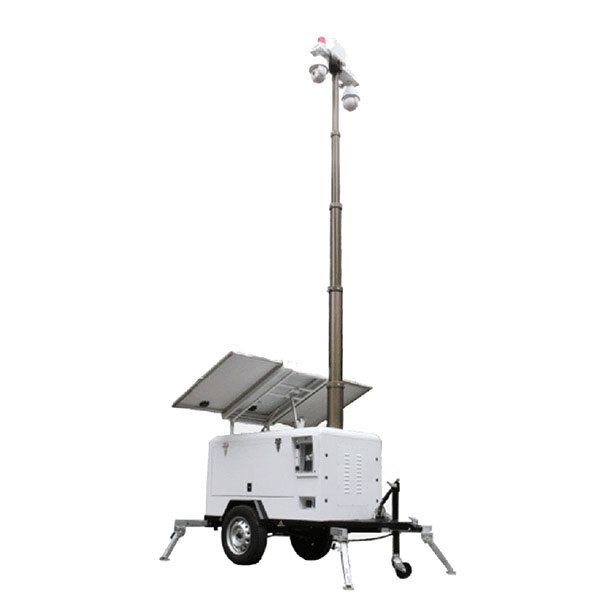
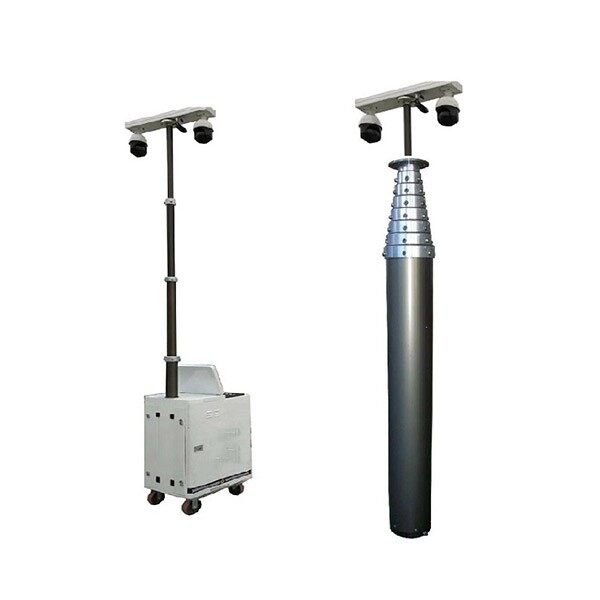
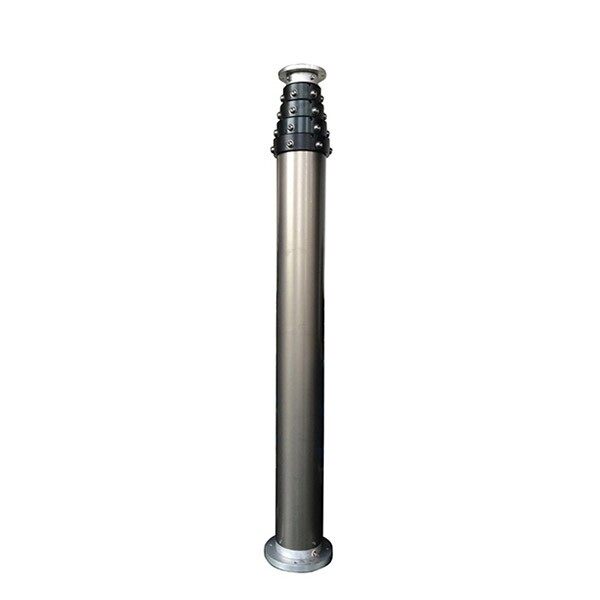
Product Description
A telescoping structure used to support facilities and equipment is called a non-lockable telescopic mast. Multiple circular or polygonal cross-section tubes that slide against one another make up this form of telescopic mast, which enables the mast to be extended and retracted to varying heights. A non-locking telescopic mast depends on various systems for stability and support rather than an internal locking mechanism to hold the telescoping sections in place.
Feature
1. Lightweight and flexible: often constructed from lightweight materials like aluminum alloy, it is portable, simple to install and use, and capable of rapid deployment and retrieval.
2. Retractability: It may be expanded like a telescope and is composed of several pipe sections that are nestled together. When expanded, it reaches a greater height, and when contracted, its length is significantly reduced, making it easy to transport and store.
3. Non-locking design: Its own structure and pneumatic, hydraulic, and other power systems sustain the extended condition without the need for a complicated locking mechanism, which lowers costs and complexity while accelerating operation.
4. High precision: Certain non-locking telescopic masts have full-length keyways to guarantee precise azimuth and direction, giving the equipment mounted on them-such as surveillance cameras, communication antennas, etc.-stable pointing to guarantee signal transmission and accurate monitoring range.
Precautions
1. Stability: The installation foundation needs to be made sure to be sturdy when in use because there is no locking mechanism. Strong winds or other outside forces might have an impact on stability. If necessary, reinforcement measures must be implemented.
2. Maintenance: To guarantee regular performance, periodically inspect the mast's mechanical components, pneumatic or hydraulic systems, and remove dust and debris as soon as possible to avoid entrance that could impair the telescopic function.
3. Operation specifications: To prevent equipment damage or personal injury from improper operation, strictly adhere to the operation manual when performing extension and retraction operations.


