

How is the brightness of a telescopic mast light measured?
As a supplier of telescopic mast lights, I often encounter inquiries from customers about how the brightness of these lights is measured. Understanding the measurement of brightness is crucial for customers to make informed decisions when purchasing telescopic mast lights for various applications, such as construction sites, emergency response, and outdoor events. In this blog post, I will delve into the key concepts and methods used to measure the brightness of telescopic mast lights.
Key Concepts in Measuring Brightness
Before we discuss the measurement methods, it's important to understand some fundamental concepts related to light and brightness.
Lumen (lm): The lumen is the SI unit of luminous flux, which measures the total amount of visible light emitted by a source. In simple terms, it quantifies the overall brightness of a light source. A higher lumen value indicates a brighter light. For example, a telescopic mast light with a lumen output of 10,000 lm will be brighter than one with a 5,000 lm output.
Lux (lx): Lux is the SI unit of illuminance, which measures the amount of light that falls on a surface. It is calculated by dividing the luminous flux (in lumens) by the area (in square meters) over which the light is distributed. Lux is a more practical unit when considering how well a particular area is illuminated. For instance, a construction site may require a certain level of lux to ensure safe working conditions.
Candela (cd): The candela is the SI unit of luminous intensity, which measures the amount of light emitted in a specific direction. It is useful for understanding the directional characteristics of a light source. A telescopic mast light with a high candela value in a particular direction will be more effective at illuminating a specific target.
Measurement Methods
There are several methods and tools used to measure the brightness of telescopic mast lights.
Integrating Sphere: An integrating sphere is a hollow spherical device with a highly reflective interior surface. The light source is placed inside the sphere, and the light is scattered and reflected multiple times until it is evenly distributed. A photodetector is then used to measure the total luminous flux of the light source. This method provides an accurate measurement of the overall brightness of the telescopic mast light.
Lux Meter: A lux meter is a handheld device that measures the illuminance at a specific point. To measure the brightness of a telescopic mast light using a lux meter, the meter is placed at the desired location where the light is expected to illuminate. The meter then displays the illuminance in lux. This method is useful for determining the actual illumination level at a particular area, which is important for practical applications.
Goniophotometer: A goniophotometer is used to measure the luminous intensity distribution of a light source. It rotates the light source in different directions while measuring the luminous intensity at each angle. This information can be used to create a polar plot or a candela distribution curve, which shows how the light is distributed in space. This method is particularly useful for understanding the directional characteristics of telescopic mast lights.
Factors Affecting Brightness Measurement
Several factors can affect the accuracy of brightness measurements for telescopic mast lights.
Distance: The distance between the light source and the measurement point can significantly affect the illuminance reading. As the distance increases, the illuminance decreases according to the inverse square law. Therefore, it is important to measure the brightness at the appropriate distance for the intended application.
Angle of Incidence: The angle at which the light strikes the measurement surface also affects the illuminance. The illuminance is highest when the light strikes the surface perpendicularly and decreases as the angle of incidence increases.
Environmental Conditions: Environmental factors such as ambient light, temperature, and humidity can also affect the brightness measurement. It is best to measure the brightness in a controlled environment to minimize these effects.
Importance of Accurate Brightness Measurement
Accurate brightness measurement is essential for several reasons.
Meeting Application Requirements: Different applications require different levels of brightness. For example, a construction site may need a high level of illumination to ensure worker safety, while a outdoor event may require a more moderate level of lighting for a pleasant atmosphere. By accurately measuring the brightness, customers can select the right telescopic mast light for their specific needs.
Energy Efficiency: Measuring the brightness helps in evaluating the energy efficiency of telescopic mast lights. A light with a high lumen output per watt is more energy-efficient, which can result in cost savings over time.

Quality Assurance: For manufacturers and suppliers, accurate brightness measurement is crucial for quality control. It ensures that the telescopic mast lights meet the specified brightness standards and perform as expected.
Our Telescopic Mast Lights
At our company, we are committed to providing high-quality telescopic mast lights with accurate brightness specifications. Our products are designed to meet the diverse needs of our customers, whether they are for construction, emergency response, or outdoor events.
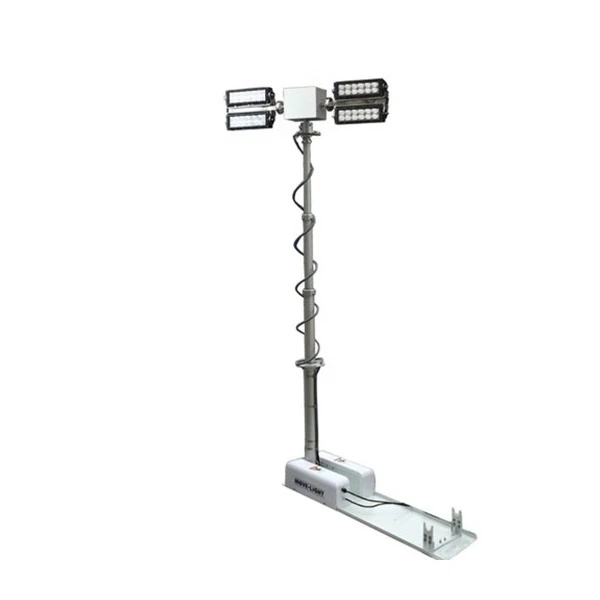
We offer a range of telescopic mast lights, including LED Tripod Light Tower, Emergency Lighting Tower, and Portable LED Light Tower. Each of these products is carefully tested to ensure accurate brightness measurement and optimal performance.
Conclusion
Measuring the brightness of telescopic mast lights is a complex but important process. By understanding the key concepts, measurement methods, and factors affecting brightness measurement, customers can make more informed decisions when purchasing these lights. At our company, we are dedicated to providing high-quality telescopic mast lights with accurate brightness specifications. If you are interested in our products or have any questions about brightness measurement, please feel free to contact us for procurement and further discussions.
References
- IESNA Lighting Handbook, 10th Edition.
- CIE International Lighting Vocabulary.
- ASTM Standards on Lighting Measurement.