

When it comes to camera towers, one of the most critical aspects is how the cameras are mounted. The mounting options for cameras on a camera tower can significantly impact the functionality, flexibility, and overall effectiveness of the surveillance system. As a camera tower supplier, I have witnessed firsthand the diverse needs of our clients and the various mounting solutions that best suit their requirements. In this blog, I will explore the different mounting options for cameras on a camera tower, discussing their advantages, disadvantages, and ideal use cases.
Fixed Mounts
Fixed mounts are the simplest and most straightforward way to attach cameras to a camera tower. As the name suggests, these mounts hold the camera in a single, unchanging position. They are typically bolted or welded directly to the tower structure, providing a stable and secure platform for the camera.
Advantages
- Stability: Fixed mounts offer excellent stability, minimizing vibrations and movement that could affect the camera's image quality. This makes them ideal for long - term surveillance applications where a steady view is required.
- Simplicity: They are easy to install and require minimal maintenance. There are no moving parts that can break down or require adjustment, reducing the overall cost of ownership.
- Cost - effective: Fixed mounts are generally less expensive than other types of mounts, making them a budget - friendly option for many surveillance projects.
Disadvantages
- Limited flexibility: Once installed, the camera's field of view is fixed. This means that if you need to change the direction or angle of the camera, you will have to physically re - position the mount, which can be time - consuming and may require specialized tools.
- Blind spots: Fixed mounts may create blind spots in the surveillance area, especially if the camera is not strategically placed. This can be a significant drawback in large or complex environments.
Ideal Use Cases
Fixed mounts are well - suited for applications where a specific area needs to be continuously monitored, such as the entrance to a building, a parking lot, or a perimeter fence. They are also commonly used in industrial settings where the camera needs to focus on a particular process or piece of equipment.
Pan - Tilt - Zoom (PTZ) Mounts
PTZ mounts are designed to provide maximum flexibility in camera positioning. These mounts allow the camera to pan (move horizontally), tilt (move vertically), and zoom in or out, providing a wide range of coverage and the ability to track moving objects.
Advantages
- Flexibility: PTZ mounts offer unparalleled flexibility, allowing operators to adjust the camera's position and zoom level remotely. This makes it possible to monitor large areas with a single camera and quickly respond to changing situations.
- Target tracking: They are ideal for tracking moving objects, such as vehicles, people, or animals. The ability to follow a target in real - time can be crucial in security and surveillance applications.
- Reduced blind spots: By being able to adjust the camera's position, PTZ mounts can significantly reduce blind spots in the surveillance area, providing more comprehensive coverage.
Disadvantages
- Higher cost: PTZ mounts are generally more expensive than fixed mounts due to their complex mechanical and electronic components. They also require more sophisticated control systems, which can add to the overall cost.
- Maintenance requirements: The moving parts in PTZ mounts are more prone to wear and tear, requiring regular maintenance and calibration to ensure optimal performance.
- Power consumption: PTZ mounts typically consume more power than fixed mounts, which can be a concern in remote or off - grid locations.
Ideal Use Cases
PTZ mounts are commonly used in large - scale surveillance applications, such as airports, stadiums, and city centers. They are also useful in security applications where the ability to track suspects or monitor dynamic situations is essential.
Gimbal Mounts
Gimbal mounts are a type of PTZ mount that uses a set of gyroscopes and motors to keep the camera level and stable, even when the tower is moving or vibrating. They are often used in mobile camera towers, such as those mounted on police cars or other vehicles.
Advantages
- Stability in motion: Gimbal mounts provide excellent stability, even when the camera tower is in motion. This ensures that the camera can capture clear and steady images, regardless of the vehicle's movement.
- Smooth movement: They offer smooth and precise movement, allowing for seamless panning, tilting, and zooming. This can be particularly useful in applications where the camera needs to track fast - moving objects.
- Reduced vibration: The gyroscopic stabilization system in gimbal mounts helps to reduce vibrations, which can improve the overall image quality.
Disadvantages
- High cost: Gimbal mounts are among the most expensive mounting options due to their advanced technology and precision engineering.
- Complexity: They are more complex to install and operate than other types of mounts, requiring specialized knowledge and training.
- Limited payload capacity: Gimbal mounts typically have a limited payload capacity, which means they may not be suitable for larger or heavier cameras.
Ideal Use Cases
Gimbal mounts are commonly used in mobile surveillance applications, such as Police Car Mobile Camera Telescopic Mast Tower. They are also useful in aerial surveillance, where the camera needs to maintain a stable position while the drone or aircraft is in flight.
Articulating Arm Mounts
Articulating arm mounts consist of a series of joints and arms that allow the camera to be positioned at different angles and distances from the tower. These mounts provide a high degree of flexibility and can be adjusted to suit a variety of surveillance needs.
Advantages
- Flexibility: Articulating arm mounts offer a wide range of motion, allowing the camera to be positioned in hard - to - reach areas or at different heights and angles. This can be useful in applications where the camera needs to be moved frequently or where the surveillance area has obstacles.
- Easy adjustment: They can be easily adjusted manually, without the need for complex control systems. This makes them a convenient option for on - site adjustments and re - positioning.
- Versatility: Articulating arm mounts can be used with a variety of camera types and sizes, making them a versatile mounting solution.
Disadvantages
- Limited stability: Compared to fixed mounts, articulating arm mounts may be less stable, especially when extended to their maximum length. This can result in some vibration and movement, which may affect the image quality.
- Potential for damage: The joints and arms in articulating arm mounts are more prone to damage than other types of mounts, especially if they are not properly maintained or if they are subjected to excessive force.
Ideal Use Cases
Articulating arm mounts are well - suited for applications where the camera needs to be re - positioned frequently, such as in construction sites or event venues. They are also useful in situations where the camera needs to be positioned close to the ground or at a specific angle to capture a particular view.
Pneumatic Mounts
Pneumatic mounts use compressed air to adjust the height and position of the camera. These mounts are often used in Pneumatic Camera Tower systems, where the camera needs to be raised or lowered quickly and easily.
Advantages
- Quick adjustment: Pneumatic mounts allow for rapid height adjustment, making it possible to change the camera's position in a matter of seconds. This can be useful in applications where the surveillance requirements change frequently.
- Smooth movement: The use of compressed air provides smooth and controlled movement, reducing vibrations and ensuring a stable platform for the camera.
- Remote operation: Pneumatic mounts can be operated remotely, allowing for easy adjustment without the need for manual intervention.
Disadvantages
- Dependency on air supply: Pneumatic mounts require a reliable source of compressed air, which may not be available in all locations. This can limit their use in remote or off - grid areas.
- Maintenance requirements: The pneumatic system requires regular maintenance to ensure proper operation, including checking for leaks and maintaining the air pressure.
Ideal Use Cases
Pneumatic mounts are commonly used in applications where the camera needs to be raised or lowered quickly, such as in emergency response situations or in areas where the surveillance needs change rapidly.

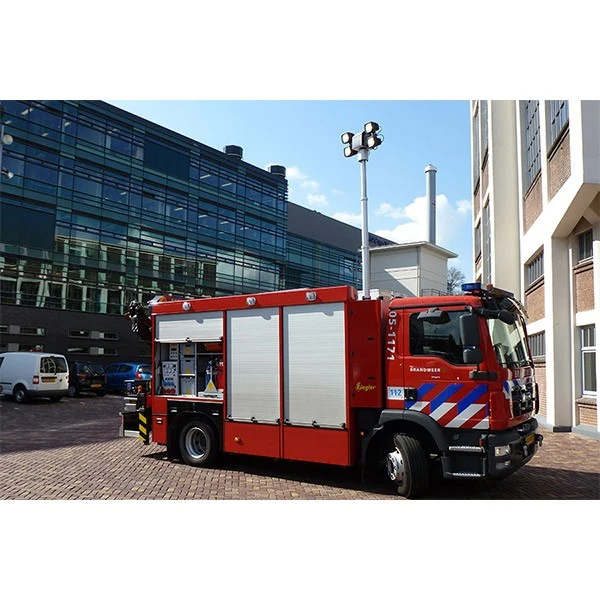
Foldable Mounts
Foldable mounts are designed to be easily folded and transported, making them ideal for portable camera tower systems. These mounts are often used in Foldable Camera Tower solutions, where the tower needs to be set up and taken down quickly.
Advantages
- Portability: Foldable mounts are lightweight and easy to transport, making them a convenient option for mobile surveillance applications.
- Quick setup and takedown: They can be easily folded and unfolded, allowing for rapid deployment and retrieval of the camera tower.
- Space - saving: When folded, these mounts take up less space, making them ideal for storage and transportation.
Disadvantages
- Limited stability: Compared to non - foldable mounts, foldable mounts may be less stable, especially when fully extended. This can affect the camera's image quality, particularly in windy conditions.
- Durability concerns: The folding mechanism may be more prone to wear and tear over time, which can affect the mount's overall durability.
Ideal Use Cases
Foldable mounts are well - suited for temporary surveillance applications, such as construction sites, outdoor events, or emergency response situations. They are also useful for law enforcement and military applications where the ability to quickly deploy and relocate the camera tower is essential.
Conclusion
Choosing the right mounting option for cameras on a camera tower is crucial for ensuring the effectiveness of your surveillance system. Each mounting option has its own advantages and disadvantages, and the ideal choice will depend on your specific requirements, budget, and environment. As a camera tower supplier, we are committed to providing our customers with the best - suited mounting solutions for their needs. Whether you need a fixed mount for long - term surveillance, a PTZ mount for maximum flexibility, or a foldable mount for portability, we have the expertise and products to meet your demands.
If you are interested in learning more about our camera tower products and mounting options, or if you have specific requirements for your surveillance project, we encourage you to reach out to us for a detailed discussion and potential procurement. Our team of experts is ready to assist you in finding the perfect solution for your needs.
References
- Johnson, R. (2020). Surveillance Camera Mounting Techniques. Security Journal.
- Smith, A. (2021). The Impact of Mounting Options on Camera Performance. Surveillance Technology Review.
- Brown, C. (2019). Mobile Camera Tower Mounting Solutions. Law Enforcement Technology.