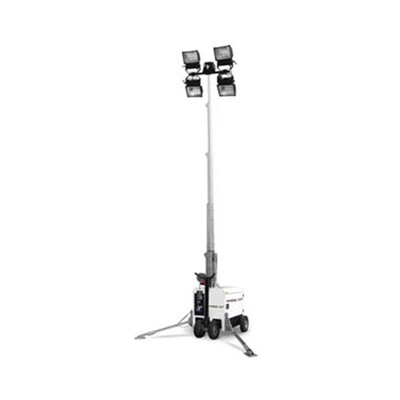
1. Check the Power Supply and Electrical System
Confirm that the generator or external power supply is working properly, and check if the voltmeter reading is within the rated range.
Check if the circuit breaker has tripped and if the fuse is blown; reset or replace if necessary.
Test if the remote control and control panel buttons are responsive to rule out signal receiver module malfunctions.
2. Diagnose Lifting System Abnormalities
If the lifting mast does not move, check if the motor is powered on and if there are any abnormal noises to determine if the failure is due to overload or carbon brush wear.
Observe if the wire rope has jumped out of its groove, broken strands, or uneven tension, and if the pulleys are stuck; ensure the transmission path is smooth.
Check for hydraulic oil leaks and chain looseness; replenish or tighten if necessary.
3. Troubleshoot Lighting System Problems
Single lamp not working: Check the lamp beads, ballast, and corresponding wiring connections to rule out poor contact.
Multiple lamps failing: Focus on checking the main control circuit, relays, and power output module to confirm there are no short circuits or overload protection triggers.
4. Verify Structure and Safety Devices
Check that the support legs are stable and the base is free of cracks, ensuring the equipment is level and stable.
Confirm that the grounding wire is connected, especially when operating in thunderstorms or humid environments, to prevent leakage or lightning strikes from damaging the control system.
5. Perform No-Load Test
After completing the initial inspection, disconnect the load and perform a no-load test run. Observe whether the lifting and lighting functions are restored to prevent secondary damage.